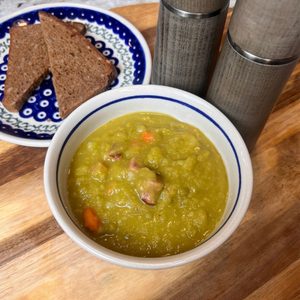
The minute the air turns crisp, there's one soup I start craving before any other: grochówka, Polish split pea soup. This fall I asked my mom to make it with me so I could get her version down on paper. It's thick and hearty, made with a slow-simmered beef bone broth, tender split peas, classic Polish soup vegetables, and smoky kielbasa stirred in at the end. It takes one pot and very little hands-on time, and it tastes like it cooked all day. No soaking the peas required.
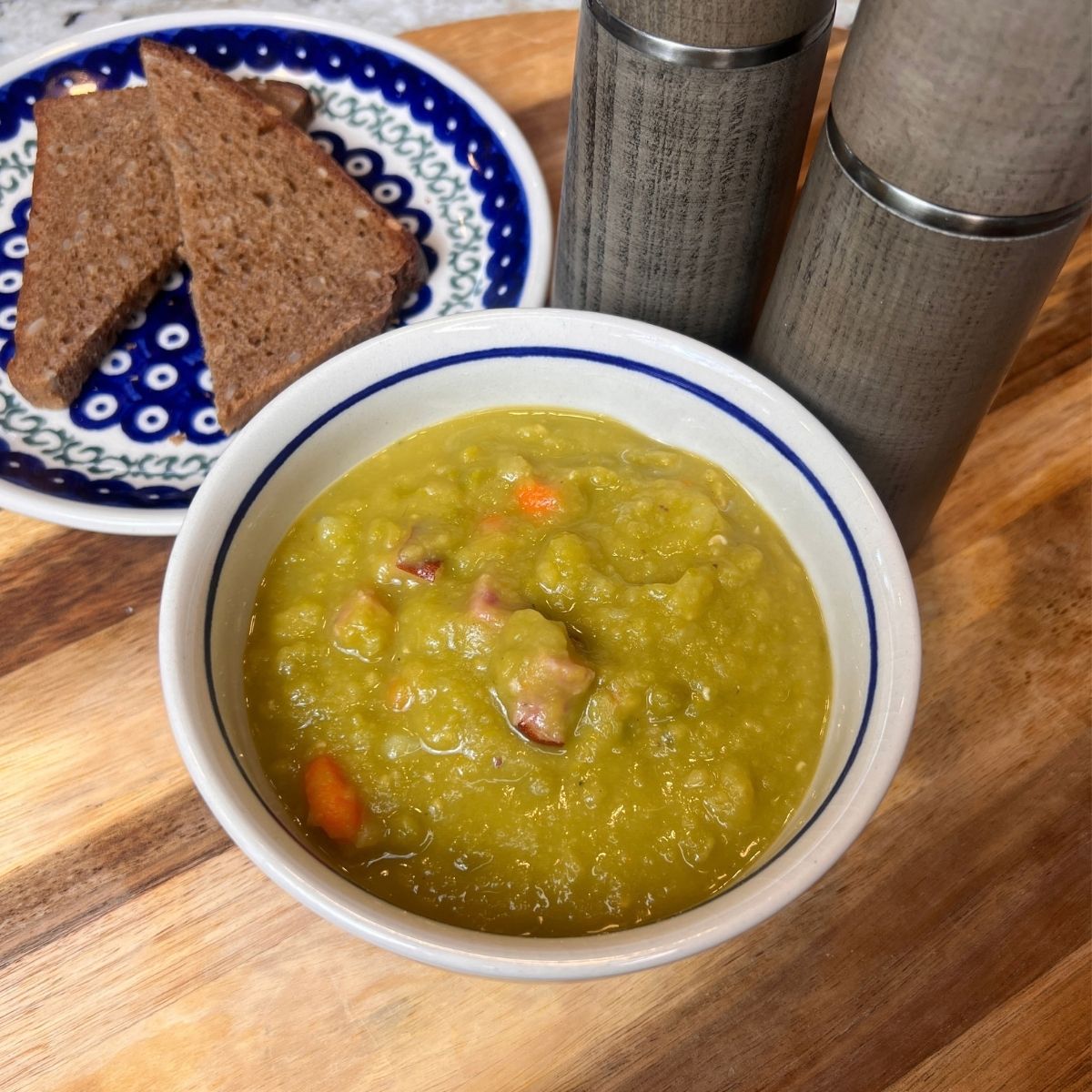
Grochówka is one of Poland's best-loved comfort foods, and it has a big reputation. It's famously tied to the Polish army field kitchen. "Grochówka wojskowa," ladled out of big kettles, still shows up at outdoor festivals, picnics, and Independence Day celebrations on November 11th. At home it's a cold-weather staple: filling, budget-friendly, and made from pantry ingredients. It's even better the next day once the peas have had time to thicken it up.
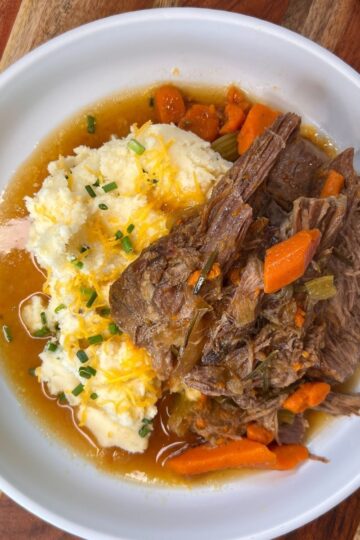
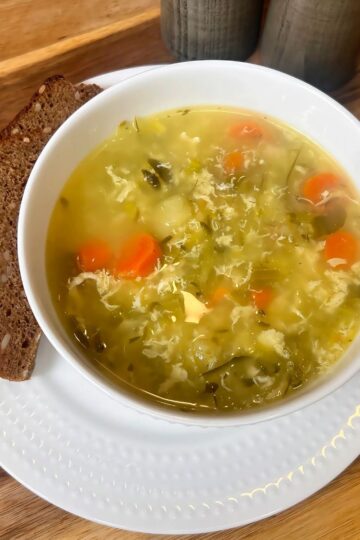
If you love soups from my mom's kitchen, try my Polish pickle soup (ogórkowa) next. It starts with the same beef shank broth. For a full Polish dinner, serve grochówka alongside my pierogi three ways.
Jump to:
Ingredients
This is simple, from-scratch cooking. A bone-in beef shank builds a rich broth and adds protein. Green split peas break down as they cook and naturally thicken the soup with no cream or flour. Celery, carrots, leek, and parsley root are the classic Polish soup vegetable base. Potatoes make it heartier, and smoked kielbasa brings the smoky, savory finish that makes this soup taste unmistakably Polish.
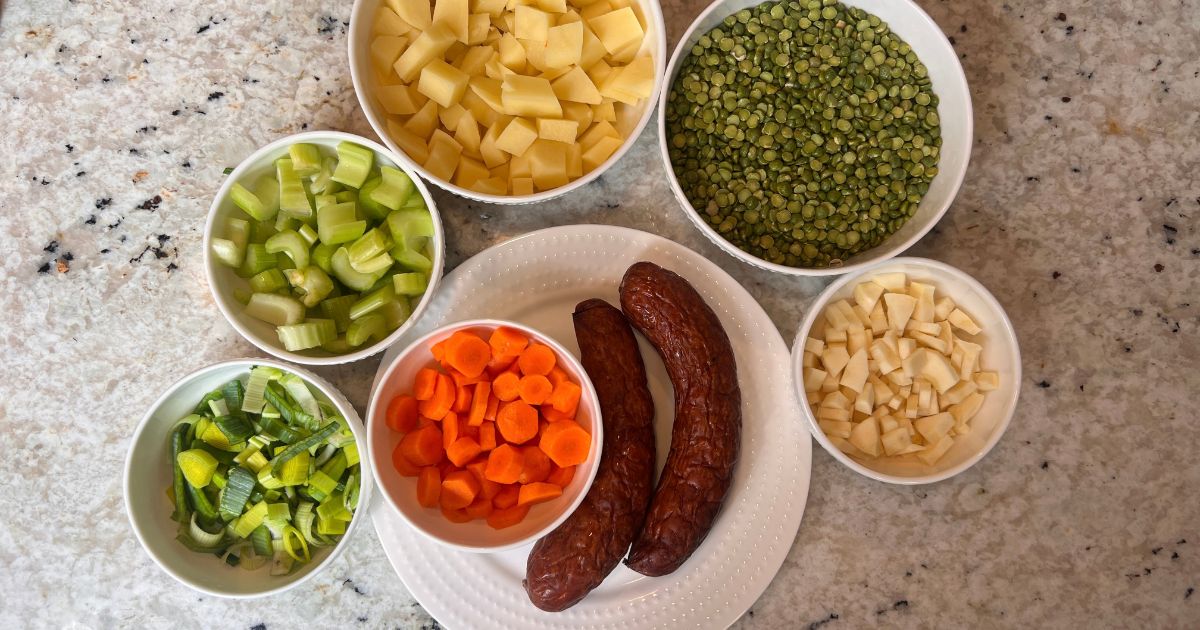
- Green split peas
- Beef bone-in shank
- Water
- Celery stalks
- Carrots
- Leek
- Parsley root
- Yellow gold potatoes
- Smoked kielbasa
- Bay leaves
- Allspice berries
- Garlic (optional)
- Salt and pepper
See recipe card for quantities.
Instructions
This soup is built in layers: broth first, then the peas, then vegetables, potatoes, and kielbasa last. Each ingredient goes in when it needs just enough time to cook through, so nothing turns to mush except the peas, which is exactly what you want.
- Step 1: Make the bone broth. Place the beef shank in a large pot, cover generously with water, and bring to a simmer. Simmer for 20-30 minutes, skimming off any foam that rises to the top so your broth stays clean.
- Step 2: Add the split peas. Stir in the rinsed split peas, along with the bay leaves and allspice, and keep simmering. The peas will start to soften and slightly thicken the broth. Give the pot a stir now and then so they don't stick to the bottom.
- Step 3: Add the aromatics. Add the celery, carrots, leek, and parsley root (and garlic, if using). Simmer for 15-20 minutes, until the vegetables and peas are tender.
- Step 4: Add the potatoes. Stir in the cubed potatoes and cook for 10-15 minutes, until fork-tender. That means a fork slides into a cube with no resistance.
- Step 5: Finish with kielbasa. Once the soup is fully cooked, stir in the diced kielbasa and let it warm through for a few minutes. Smoked kielbasa is already cooked, so it only needs to heat up.
- Step 6: Season and serve. Remove the bay leaves, allspice, and bone. Shred any meat from the shank and stir it back into the soup. Season with salt and pepper to taste, and serve hot.
Hint: season with salt at the very end. The kielbasa adds a lot of salt as it warms in the soup, so if you salt the broth early, the finished soup can end up too salty. Taste after the kielbasa goes in, then adjust.
Substitutions
This is a pretty forgiving soup. Here are a few swaps that work well.
- Beef shank - a smoked ham hock or smoked pork ribs are a very common Polish swap and add even more smoky flavor. Just go easy on the salt.
- Parsley root - if you can't find it, a parsnip is the closest substitute in both flavor and texture
- Green split peas - yellow split peas work the same way and are actually very common in Poland. The soup will be golden instead of green.
- Kielbasa - diced smoked bacon, crisped in a pan before stirring in, gives you a similar smoky, salty finish
This soup is naturally gluten-free as long as your kielbasa is. Check the label, since some brands use fillers.
Variations
Once you've made it the traditional way, here are a few ways to make this soup your own.
- Extra smoky - brown the diced kielbasa in a dry pan before adding it at the end, instead of just warming it in the broth
- High-protein - shred all the meat from the beef shank back into the soup, and add extra kielbasa. Split peas already bring plenty of plant protein and fiber, so this is a very filling bowl.
- Army-style (wojskowa) - make it extra thick by simmering a little longer, and finish with a spoonful of dried marjoram, a classic Polish seasoning for pea soup
- Smooth - blend part of the soup with an immersion blender before adding the kielbasa for a creamier texture
Does your family make grochówka? Let me know in the comments how you make it!
Equipment
You'll want a large, heavy-bottomed stockpot or Dutch oven for this one. Split peas like to settle and stick to the bottom of the pot as they thicken, and a heavy base holds a gentle, even simmer without scorching. If you're using a thinner pot, keep the heat on the low side and stir more often.
A fine-mesh strainer is handy for rinsing the split peas, and a slotted spoon or skimmer makes it easy to remove the foam from the broth in Step 1.
Storage
Store leftover grochówka in an airtight container in the fridge for up to 4 days. The soup will thicken a lot as it cools, almost to a paste. When reheating, add a splash of water or broth and warm it on the stovetop over medium-low heat, stirring often, until it's back to the texture you like.
This soup freezes well for up to 3 months. The potatoes can get a little softer after thawing, but the flavor holds up great. Thaw overnight in the fridge and reheat with a splash of water.
FAQ
No. Split peas are already split and skinned, so they cook through during the simmer without soaking. Just rinse them well and pick out any small stones before adding them to the pot.
Grochówka is a traditional Polish split pea soup, usually made with a smoked meat or bone broth, soup vegetables, potatoes, and kielbasa. It's famously associated with Polish army field kitchens and is often served at outdoor festivals and on Independence Day.
The peas likely need more time. Split peas thicken the soup as they break down, so keep simmering and stirring until they're completely soft. Older dried peas can also take longer to cook. The soup will thicken a lot more as it cools.
Yes. Split pea soup freezes well for up to 3 months in an airtight container. Thaw it overnight in the fridge, then reheat on the stovetop with a splash of water, since it thickens as it sits.
Pairing
These are my favorite dishes to serve with grochówka:
Grochówka (Polish Split Pea Soup)
Ingredients
- 1 lb beef bone-in shank
- 8 cups water or enough to cover the shank generously
- 1 lb green split peas rinsed (no soaking needed)
- 2 celery stalks diced
- 3 carrots diced
- ½ leek sliced
- 1 parsley root diced
- 4 yellow gold potatoes peeled and cubed
- 8 oz smoked kielbasa diced
- Salt and pepper to taste
Instructions
- Make the broth: Place the beef shank in a large pot and cover generously with water. Bring to a simmer and cook for 20-30 minutes, skimming off any foam that rises to the top.
- Add the split peas: Stir in the rinsed split peas. Keep simmering, stirring now and then so the peas don't stick to the bottom.
- Add the vegetables: Add the celery, carrots, leek, parsley root. Simmer for 15-20 minutes, until the vegetables and peas are tender.
- Add the potatoes: Stir in the potatoes and cook for 10-15 minutes, until fork-tender.
- Add the kielbasa: Stir in the diced kielbasa and let it warm through for a few minutes.
- Season and serve: Remove the bay leaves, allspice, and bone. Shred any meat from the shank and stir it back into the soup. Season with salt and pepper to taste, and serve hot.
Notes
Salt at the end: the kielbasa adds a lot of salt, so taste the soup before seasoning.
Extra smoky: brown the kielbasa in a dry pan before stirring it in.
Storage: keeps in the fridge for up to 4 days and in the freezer for up to 3 months. The soup thickens as it sits, so add a splash of water when you reheat it.