If you grew up Polish, Sunday meant rosół. This version keeps everything you love about the classic, with one change that makes a huge difference: the chicken and vegetables get roasted first. That browning gives you a roasted Polish chicken soup with a deeper, richer, almost amber-gold broth, while still staying beautifully clear. Same comfort, more flavor, and very little extra work.
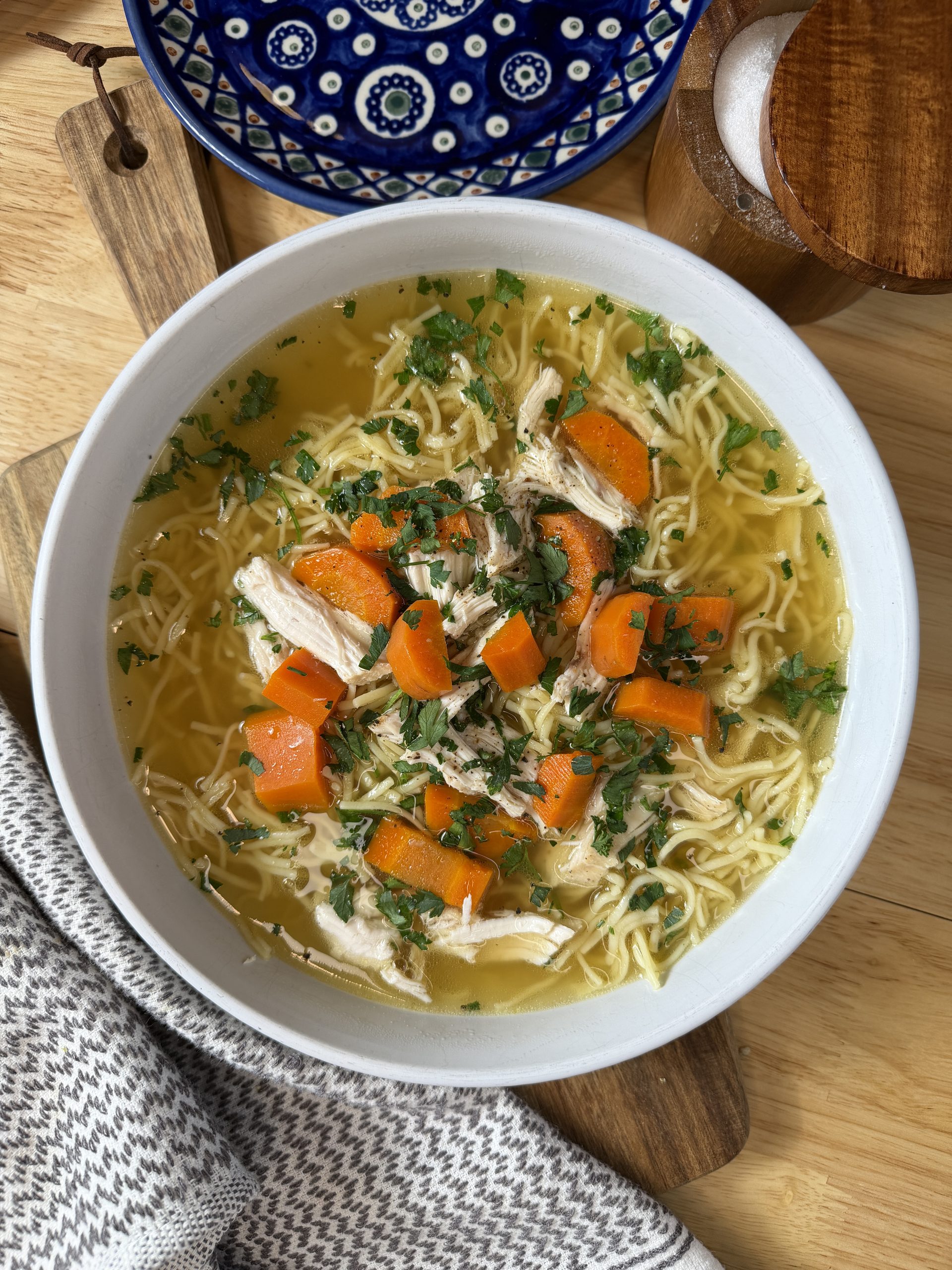
Rosół is the soup Polish families make for Sunday dinner, holidays, and anyone who's feeling under the weather. It's especially welcome once the weather turns cold, and it's the base for so many other dishes, so a big pot never goes to waste.
Jump to:
Ingredients
Traditional rosół relies on a short list of simple ingredients, so each one matters. A whole chicken, including the backbone, neck, and wing tips, gives the broth body and natural gelatin. The classic soup vegetables (carrots, celery, leek, and onion) add sweetness, and roasting the onions with their skins on deepens that signature golden color. Allspice, bay leaves, and black peppercorns are the traditional Polish aromatics, and fresh parsley (plus lovage, if you can find it) gives the broth its classic herbal finish. Thin egg noodles, called nitki, are the traditional way to serve it.
- Whole chicken, cut into pieces or spatchcocked (keep the backbone, neck and wing tips)
- Carrots, peeled
- Celery ribs
- Leek, cleaned and halved
- Yellow onions, halved, skin on
- Garlic, whole head with the top sliced off
- Neutral oil
- Kosher salt
- Hot water, for deglazing
- Cold water
- Bay leaves
- Allspice berries
- Black peppercorns
- Fresh parsley sprigs (plus a few lovage leaves, optional)
- Thin egg noodles (nitki)
- Fresh dill
See recipe card for quantities.
Instructions
Roasting first adds about 45 minutes up front, but most of the cooking time is hands-off simmering. Here's how it comes together.
- Step 1: Heat the oven to 425°F. Pat the chicken dry, then arrange the chicken pieces, backbone, carrots, celery, leek, onions (cut side down), and garlic on a large sheet pan. Toss with oil and salt.
- Step 2: Roast for 45 to 50 minutes, until the chicken skin and vegetables are deeply golden brown. The chicken doesn't need to be cooked through, since it finishes in the pot.
- Step 3: Transfer everything to a large stockpot. Pour hot water onto the hot sheet pan, scrape up all the browned bits, and pour it into the pot. Those bits are pure flavor.
- Step 4: Add the cold water, bay leaves, allspice, peppercorns, and parsley (and lovage, if using). Bring slowly to a bare simmer, never a rolling boil, and skim off any foam.
- Step 5: Simmer uncovered on low. After about 90 minutes, lift out the chicken, pull the meat off the bones, and set it aside. Return the bones to the pot.
- Step 6: Keep simmering on low for about 1 more hour, until the broth is rich and deep gold.
- Step 7: Strain the broth through a fine-mesh sieve and season with salt to taste. Slice the carrots into coins and shred the reserved chicken.
- Step 8: Cook the noodles separately in salted water according to the package directions, then drain. Cooking them separately keeps the broth clear.
- Step 9: Build each bowl with noodles, carrot coins, and shredded chicken. Ladle the hot broth over the top and finish with fresh dill and cracked black pepper.
Hint: Don't stir the pot while it simmers. Stirring breaks up the fat and proteins and clouds the broth. Just let it barely bubble and skim as needed.
Make it ahead
Cut and salt the chicken and prep the vegetables the night before. Refrigerating the salted chicken uncovered overnight dries the skin, so it roasts up crispier and browner, which means more color and flavor in your broth.
Substitutions
Rosół is flexible, so you can work with what you have:
- Celery - use a peeled, quartered celeriac (celery root) instead of celery ribs for a more traditional Polish flavor
- Whole chicken - bone-in, skin-on thighs and drumsticks plus a few wings work well; you want bones and skin for body and flavor
- Noodles - swap the egg noodles for your favorite gluten-free pasta (cooked separately) to make this gluten-free
- Lovage - if you can't find it, skip it, or add a few celery leaves for a similar savory note
Variations
Once you've got the base down, there are plenty of ways to make it your own:
- Extra-rich - roast the heart and gizzard along with the backbone, neck, and wing tips for even more body (skip the liver, it makes the broth bitter and cloudy)
- Sweeter broth - roast a parsnip or parsley root with the other vegetables for a classic, slightly sweeter rosół
- Heartier bowl - serve over boiled potatoes instead of noodles, or add both
- Kid friendly - use small pasta shapes like alphabets or stars
Got leftover broth? Use it as the base for [another soup recipe].
Equipment
You'll need a large rimmed sheet pan for roasting, a big stockpot (8 quarts or larger) to hold the chicken, vegetables, and water, and a fine-mesh sieve for straining. A metal sheet pan browns faster and more evenly than glass or stoneware; if you only have glass, expect to add a few minutes of roasting time, and watch the color rather than the clock.
If your pot is on the smaller side, reduce the water slightly rather than overfilling, and top up with hot water as it simmers. Here's the stockpot I use (affiliate link).
Storage
Store the broth, shredded chicken, carrots, and noodles in separate containers in the fridge. Noodles left sitting in broth soak it up and turn mushy. The broth keeps for up to 5 days in the fridge, and the chicken and noodles are best within 3 to 4 days. Reheat the broth until steaming and assemble fresh bowls.
The broth freezes beautifully for up to 3 months. Freeze it in portions so you always have some ready for a quick bowl or a sick day. Cook fresh noodles when you serve it.
Top Tip
Keep it at a bare simmer the whole time, just a few lazy bubbles breaking the surface. A rolling boil emulsifies the fat into the liquid and turns the broth cloudy. Low and slow is what gives rosół that clear, golden look.
FAQ
Roasting browns the chicken skin and vegetables, which adds deeper, savory flavor and gives the broth a richer golden color than the traditional simmer-only method.
Cloudy broth usually comes from boiling too hard, stirring, or adding the liver. Keep it at a bare simmer, skim the foam, don't stir, and cook the noodles separately.
The onion skins add natural color, helping give rosół its signature deep golden hue.
Rosół Pieczony (Roasted Polish Chicken Soup)
Ingredients
- 4 pounds whole chicken cut into pieces or spatchcocked (keep the backbone, neck and wing tips)
- 4 carrots peeled
- 3 celery ribs
- 1 leek cleaned and halved
- 2 yellow onions halved, skin on
- 1 head garlic top sliced off
- 1 tablespoon neutral oil
- 2 teaspoons kosher salt plus more to taste
- 2 cups hot water for deglazing
- 3.5 liters cold water
- 2 bay leaves
- 1 teaspoon black peppercorns
- 1 cup parsley sprigs plus a few lovage leaves, optional
- 12 ounces thin egg noodles nitki
- 2 tablespoons fresh parsley chopped
- Cracked black pepper to finish
Instructions
- Prep and season: Heat the oven to 425°F. Pat the chicken dry. Arrange the chicken pieces and backbone, carrots, celery, leek, onions (cut side down) and garlic on a large sheet pan. Toss with the oil and salt.
- Roast: Roast at 425°F for 45 to 50 minutes, until the chicken skin and vegetables are deeply golden brown. The chicken does not need to be cooked through, since it finishes in the pot.
- Deglaze the pan: Transfer everything to a large stockpot. Pour the hot water onto the hot sheet pan and scrape up all the browned bits, then pour it into the pot.
- Add water and aromatics: Add the cold water, bay leaves, peppercorns and parsley (and lovage, if using). Bring slowly to a bare simmer, never a rolling boil, so the broth stays clear. Skim off any foam.
- Simmer and pull the meat: Simmer uncovered on low. After about 90 minutes, lift out the chicken, pull the meat off the bones and set it aside. Return the bones to the pot.
- Finish simmering: Keep simmering on low for about 1 more hour, until the broth is rich and deep gold.
- Strain and season: Strain the broth through a fine-mesh sieve. Season with salt to taste. Slice the carrots into coins and shred the reserved chicken.
- Cook the noodles: Cook the noodles separately in salted water according to the package directions, then drain. Cooking them separately keeps the broth clear.
- Serve: Build each bowl with noodles, carrot coins and shredded chicken. Ladle the hot broth over the top. Finish with fresh dill and cracked black pepper.
Notes
Extra body: Roast the heart and gizzard along with the backbone, neck and wing tips. Leave out the liver, since it makes the broth bitter and cloudy.
For the clearest broth: Don't stir while it simmers, and keep it at a bare simmer the whole time.
Celery root option: Swap the celery ribs for ½ celeriac, peeled and quartered.
Storage: Store the broth, chicken and noodles separately. The broth keeps 5 days in the fridge or 3 months in the freezer.